
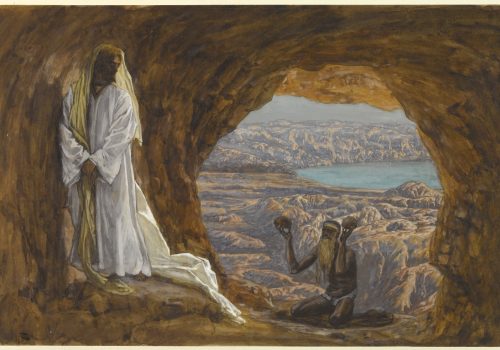

Jesus wilderness testing.
40 Days in the Wilderness with Jesus
"And Jesus returned from the Jordan, full of the Holy Spirit, and was led by the Spirit for forty days in the wilderness, tempted by the devil." And he didn't eat anything over those days, and when they were over, he was famished. (Luke's Gospel, Chapter 4, verses 1–2).
A site of trial, encounter, and renewal
What drove Jesus to spend 40 days and nights in the Judean desert in isolation, prayer, and fasting? This desert area was largely unusable and dangerous for anyone who ventured to stay in it for an extended period of time. risk from blistering heat during the day and extreme cold at night, as well as risk from wild animals and scorpions, as well as a scarcity of food and water.
The desert was a site of trial, encounter, and rejuvenation for God's chosen people, Israel, and many of their leaders. When the Israelites were released from slavery in Egypt, they wandered in the desert for 40 years. This was seen as a time of cleansing and preparation for entering the promised land. Moses went to the mountain of the Lord in the Sinai wilderness, fasted, and prayed for 40 days and nights (Exodus 24:18). After being nourished with bread from heaven, Elijah walked through the wilderness for 40 days without sustenance to the mountain of God (1 Kings 19:8). Jesus fasted in the wilderness for 40 days in order to prepare for the mission that the Father had assigned to him.
Why did Jesus choose such a desolate, lonely location for such a prolonged period of prayer and fasting? In their gospel accounts, Matthew, Mark, and Luke tell us that the Holy Spirit led Jesus into the wilderness. Mark puts it succinctly: "The Spirit immediately drove him out into the wilderness" (Mark 1:12).
What drove Jesus to seek isolation, away from his family and companions, for such an extended period of time? Was it merely to put himself to the test and prepare for his mission? Or was he likewise succumbing to Satan's temptation? In English, the word tempt usually means to urge someone to do something improper or forbidden. The scriptural word employed here also implies proving and purifying someone to check if they are ready for the task at hand. We evaluate airline pilots to ensure they are fit to fly in all conditions, including turbulence and poor visibility. Similarly, God tests his servants to see if they are fit to be employed by him.
God tested Abraham numerous times to show his faith and to increase his belief in God's promises. Even when God urged Abraham to sacrifice Isaac, the son of promise, Abraham cheerfully obeyed. When the Israelites were put to the ultimate test in Egypt for over 400 years, they did not forget God. They obeyed God's word and remembered his promise to deliver them from their oppressors.
Jesus, like us, was tested.
This pattern of testing was not unique to Jesus. He went into the desert hungry. In the Garden of Eden, Adam and Eve had all they needed. However, they disobeyed God by eating the forbidden fruit because they trusted in themselves rather than in God. They were driven out of paradise and into the wilderness. Jesus enters the wilderness freely in order to restore paradise to those who have lost it. Jesus denies food to demonstrate his reliance on the bread of heaven, the word of God, which will sustain him not only in his physical hunger but also in his hour of temptation.
When Satan tempts Jesus to change stones into food, Jesus responds with Scripture: "Man shall not live by bread alone, but by every word that proceeds from the mouth of God" (Deuteronomy 8:3; also see Matthew 4:4). In this chapter, Jerome, the famous biblical scholar who lived near the Judean desert (347–420 AD), says:
The Lord answered in this manner because it was his intention to defeat the demon with humility rather than might. The Saviour's response shows that he was tempted as a man: "Not by bread alone shall man live, but by every word that comes forth from the mouth of God. So anyone who does not eat God's Word will perish.
Where did Jesus find the fortitude to endure the hard conditions of the desert and the tempter's seduction? He nourished himself on God's word and found strength in carrying out his father's plan. Satan will undoubtedly entice us, and he will do everything in his power to persuade us to choose our will over God's will. If he cannot persuade us to reject our faith or sin mortally, he will try to persuade us to make decisions that will gradually lead us away from what God desires for us.
Jesus was tempted in the same way we are, and he overcame sin not through his own human effort but through the grace and strength given to him by his Father. He had to give up his will in order to fulfil his father's desire. He succeeded because he wanted to please his Father and knew that his Father would give him the strength he needed to overcome the difficulties in his path. According to Luke, Jesus was "full of the Holy Spirit" (Luke 4:1). When tempted by the devil, Jesus did not combat his enemy with human might. He depended on the power bestowed upon him by the Holy Spirit. Jesus came to destroy the evil one who had imprisoned us in sin and fear of death (Hebrews 2:14). His submission to his Father's will and willingness to bear the cross rectified Adam's disobedience. His victory over sin and death earned us not only forgiveness of our sins but also adoption as God's sons and daughters.
The Lord is gracious to the lowly.
In our daily lives, how can we overcome sin and moral weakness? The Holy Spirit is given to us by the Lord Jesus to aid us in our weakness (Romans 8:26) and to be our guide and consoler in times of temptation and testing (1 Corinthians 10:13). The Lord bestows favour on the humble who admit their reliance on him (James 4:6), and he aids us in resisting the attacks of our adversary, Satan, who attempts to destroy us (1 Peter 5:8–10; Ephesians :10–18). The Lord Jesus is always ready to pour forth his Spirit on us, giving us the power and confidence we need to overcome sin and reject Satan's falsehoods and deceptions. God desires that we "fight the good fight of faith" (1 Timothy 6:12) with the force and vigour that the Holy Spirit provides. Do you look to the Lord for strength and guidance?
"Lord Jesus, your word gives me life and joy. Fill me with your Holy Spirit, so I may have the power and courage to embrace your will in all things and to reject anything that contradicts it."