

Cost of Disciple
Discipleship and Its Price
Managing One's Entire Life While Dying To Oneself
During Jesus' time spent ministering to the masses, people came to Him for several reasons.
Crowds of people followed Jesus everywhere.
He went, but when their necessities were supplied, many of them abandoned Him.
Not everyone who visited Jesus became a follower.
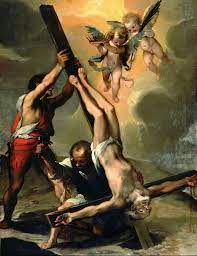
Jesus, however, extended an invitation to everyone who would listen during His ministry: "Whoever wants to be my disciple must deny themselves and take up their cross daily and follow me." According to Matthew 16:24. To follow Jesus, one must consciously choose to renounce oneself and one's own desires. There was no way to go back to the way things were. Even now, there are a lot of people who attend church, but not many who actually commit to being disciples.
The last thing Jesus commanded His followers to do before He ascended to heaven was to go into all the world and make disciples.
If Jesus' last Great Commision was to make disciples, then He needed to show them how to do it. During the three and a half years of His ministry, Jesus was actively creating disciples, and He tasked His followers with continuing His work.
Jesus' whole ministry serves as a template for how we should live and teach others to become disciples.
What does it say on the receipt in terms of money?
In today's contemporary society, there is a price for everything. Customers consider the cost before making a purchase decision. Jesus was unwilling to lower the prohibitive cost of following Him. Miracles including as healing, casting out demons, and feeding the masses cost nothing, but He made it plain that being a follower would not be a cheap choice. Before setting off on their journey, He urged His disciples to "count the cost" (Luke 14:25–33).
The criteria for following Jesus as a disciple
Luke 9:23 and 14:25-33 provide a brief checklist of sorts for what it takes to follow Jesus and become one of his disciples.
Turn away from anything that draws your attention to yourself (Mark 8:34; Romans 6:16-23; Romans 8:1-13; Galatians 5:19-24; Colossians 3:1-10); this includes your own sense of value and dependency on yourself, as well as your own desires and goals.
Keep picking up the cross: As the Scriptures instruct (Mark 8:34; Luke 9:23; Romans 6:11-13; Romans 8:12-13; Colossians 1:23; Colossians 2:6-7; Colossians 3:5-10), you must be willing to give your life for Jesus.
Adhere consistently to Christ: Listen to Him (Matthew 7:21; John 5:24).
It is impossible to stumble into a life as a follower of Jesus. Therefore, before deciding to begin, we should sit down and calculate the full cost (Luke 14:28) and weigh the ability (Luke 14:31).
The challenges of following Jesus.
Here are three people who didn't pass the first, most fundamental, test of being Jesus' followers (Luke 9:57-62). There will be times when we all wish we hadn't accepted the discipleship path. The three men in this account (1 Kings 19:20; 2 Timothy 4:10), who remain unidentified, allowed something else into their life that prevented them from following Jesus.
A guy approached and declared, "I will follow you wherever you go." However, the man rejected Christ's offer to join Him since doing so may mean foregoing a pleasant life and even one's physical house and shelter in this world. Discipleship can be impeded by the pursuit of material wealth and the conveniences of this life.
While the second man had a passing interest in Christ, he put himself and his problems first. The Lord, I must first go and bury my father," he said in response to Christ. The Bible, however, states, "Seek first His kingdom and His righteousness, and all these things will be given to you as well." The expression "me first" exemplifies the unfavourable reaction to the requirements of discipleship. How can we claim to follow Jesus if we put other things before of him?
The third man, like the first, decided to join Christ on his own will, but he, too, echoed the second by saying, "Lord... my family first...." He had aspirations of following Jesus, but he ultimately prioritised his family. Christ peered into his heart and realised that he was not prepared to sacrifice his worldly ties for the sake of discipleship, even if his enquiry seemed logical on the surface.
These three males did not even pass the first discipleship hurdle. They weren't ready to commit to Christ because of three different factors. The first man's obstacle was a desire for material possessions, the second's was concern for financial security, and the third's was a dedication to family ties.
How many of us now would be qualified to become Jesus' disciples if He undertook the recruiting Himself?
Making disciples has its advantages.
This ministry is not without its sacrifices and sacrifices. In a series of brief parables found in Luke 14:26–33, Jesus cautioned his followers to "count the cost" before committing to a life of obedience. Devoted followers don't second-guess the expense because of the benefits they expect to get (Philippians 3:13-14). If you want to please Christ like Paul did, you need to be like a true disciple who has already resolved the question of the cost of discipleship and is willing to do whatever the Lord wants you to do.
However, creating disciples isn't a breeze. Our own lives are at stake (Luke 9:24; 1 Thessalonians 2:8). Christ's commendation, "Well done, good and faithful servant!" is the ultimate reward for creating disciples. (Mt. 25:21–23) Hearing "Well done!" from the Creator of the Universe, the Almighty God, is the highest praise possible.
Let's add up what it will take for us to be fully devoted followers of Jesus, and then resolve to go out and create more disciples until everyone has the chance to make that decision for himself.