
3 Parables about God's Father's Heart
In Luke 15, Jesus offers three stories (parables) about God's love for us that comprise a three-fold parable. The Lost Sheep, the Lost Coin, and the Lost Son are three parables in one, demonstrating the overflowing love of the Triune God—Father, Son, and Holy Spirit. God is triune; He is one God manifested in three persons. This chapter is also triune. Luke 15 has three parables of Jesus that all show the same truth: God's overwhelming love for us. In reality, Jesus refers to them as a single story divided into three sections (v. 3).
The first speaks of God the Son's love.
The second speaks of God's and the Holy Spirit's love.
The third verse talks of God the Father's love.
The three stories are about three lost objects (which represent us) and three owners (the Triune Godhead) who carefully seek and rediscover what was lost with great joy.
The first tells of God the Son's love for the lost sheep.
The second talks of God's and the Holy Spirit's love for the lost coin.
The third tells of God's (the Father's) love for the lost son.
The amount of time and effort we put into locating something when it is lost, as well as our excitement upon finding it again, show the value and importance we place on it. These stories demonstrate how valuable, unique, and significant we are to God. He personally loves us and does everything in His power to reclaim and restore us to Himself, enjoying greatly when we are found by Him! It's comforting to know we're liked. It gives us confidence in prayer and inspires us to adore Him.
(v1-3) Introduction. "Then all the tax collectors and sinners gathered around Him to hear Him. "This man receives (repentant) sinners (back into fellowship) and eats with them (showing His loving acceptance of them)," the Pharisees and Scribes objected (v. 1–2). Rather than Jesus, these legalists claimed to be the real representatives of God. "If Jesus was truly of God, he would reject sinners, not welcome them back," they reasoned.
So Jesus told this three-part parable to demonstrate that their conception of God was incorrect: "So He said this parable to them, saying (v3):
1. The shepherd and the lost sheep
The first exemplifies the Shepherd-Son's self-sacrifice: "What man of you, having a hundred sheep, does not leave the 99 in the wilderness and go after the one that is lost until he finds it? And when he has found it, he lays it on his shoulders, rejoicing; and when he comes home, he calls together his friends and neighbours, saying to them, "Rejoice with me, for I have found my sheep. I tell you, there will be greater delight in heaven over one sinner who repents than over 99 just people who do not need to repent" (v. 3–7).
The first story concerns a shepherd with 100 sheep. One of the sheep wandered off one day. It was safe when it was with the shepherd, but this sheep was foolish. He believed he could look after himself and survive without the shepherd. He didn't require the shepherd's leadership, care, direction, or supply. He could go it alone and do things his way. He planned to go for a walk by himself. He travelled into a risky area of the forest, where he could fall into trenches, get bruised by rocks, and be eaten by wolves. He would certainly die on his own. A sheep can't defend itself. He is powerless. Furthermore, a sheep has no idea how to get home.
The Bible compares us all to sheep. According to the Bible, "all we (people) have gone astray; we have turned each to his own way" (Isaiah 53:6). Sin is turning away from the Lord, our shepherd. We go off on our own. "I'm fine; I don't need God," we declare. "I'll look after myself, and I'll do it my way. We have no idea that we are in grave danger. Then we realise one day
We've gone astray. We're on our own. We have no idea where our shepherd is. We have no idea how to go home.
"I am the Good Shepherd; the Good Shepherd gives His life for the sheep," Jesus declared. "I lay down my life for the sheep," says Jesus (John 10:11, 15).
Matthew 9:36 illustrates His love for all sheep.
The sheep falls into a pit and rests there, weak, hungry, and helpless, in the story. The shepherd could easily claim, "I still have 99 sheep and have only lost one. In any case, he was a dumb sheep. He completely disregarded me. It serves him well. Some people believe God is like this. However, the shepherd adored this sheep. He adored each and every one of them. They were all significant to him. He knew all of their names. He was really sad when he learned that one had wandered off the route. The shepherd abandoned the 99 in search of the missing one. He ventured into the perilous cracks, rocks, and pits. He kept calling for it. He was so obsessed with it that he refused to quit until he found it. He peered around, climbing high and low. "Where are you?" he yelled, his voice overflowing with emotion. It was getting dark and the wolves were howling, but he was not going to give up. He felt certain it was somewhere. Jesus stated, "I have come to seek and save the lost sheep (Luke 19:10). The shepherd pleaded, "O God, please save my sheep.
He was startled to hear a pitiful bleating. The sheep was hurt and unable to move. It was helpless to preserve itself, like us, but it could bleat. The shepherd became enthralled and pursued the sound. Then he noticed it. It had landed in a perilous abyss. He could only preserve it by putting his own life in danger. He continued to descend into the hole. It was getting dark at this point. He grabbed the sheep.
"When he found it, he laid it on his shoulders, rejoicing," Jesus said of the shepherd. He'd located his much-loved sheep. He climbed out of the pit, filled with laughter. He wasn't upset with the sheep. He was just relieved to see them again.
We are all in need of being found by the Good Shepherd. He's looking for us. He addresses us through the gospel. He summons us (Rev. 3:20). He's waiting for us to scream! We cannot save ourselves, but we can and must call on Him to do so: "All who call upon the name of the Lord shall be saved" (Rom 10:13). He hears us and saves us when we reach out to him. Our response allows him to locate us.
Our good shepherd, Jesus, saw us trapped in the pits of sin and hell. We'd gotten lost. We were going to die, powerless and feeble. The wolves were eager to devour us. He entered this treacherous wilderness world from the pleasant pastures of paradise. Then He gave His life for us. He descended into the pit to save us. He laid His hand on us on the cross, bearing our sins. He dived into the abyss (of hell and death) to rescue us. He rose victorious on the third day. "God raised from the dead our Lord Jesus, that great shepherd of the sheep," according to Hebrews 13:20.
Jesus arose from the pit of death and hell, bearing us up on His shoulders and rejoicing over us! This was the joy laid before Him, which enabled Him to bear the pain of saving us from destruction (Heb 12:2). We were lost, but now we've been discovered—praise God!
1 Peter 2:24–25 says, "In His own self, Jesus bore our sins in his own body on the Cross, that we, being dead to sins, might live unto righteousness, by whose stripes you were healed. For you were straying sheep who have now been returned to the Shepherd and Guardian of your souls.
Have you gone back to your shepherd? When a sheep is discovered, he is not only repaired and reunited with the shepherd but also with the other 99 sheep. He joins the flock's fellowship (the church). The shepherd rejoiced as he carried the sheep on his shoulders all the way home. Similarly, Jesus, our Shepherd-Saviour, pulls us up on His shoulders and carries us all the way to the splendour of heaven. He forgives us for leaving him and rejecting him. He is simply overjoyed that we have returned to him.
When he returned home, he gathered all of his family and friends. He should have been tired, but he was so ecstatic at finding the lost sheep that he woke everyone up! "Rejoice with me (let us have a party), for I have found my lost sheep. He was lost; I thought he was dead, but now he's found. He's still alive! Doesn't this sound a little excessive? Yes! That is exactly how God feels about us. It's plenty and overflowing! "Likewise, there will be more joy in heaven over one sinner who repents (turns from our own way to God's way) and follows the true shepherd," Jesus remarked.
When we come to Jesus, He rejoices so much that He can't contain himself and invites all of heaven to join Him, for we have returned home. That is how much we are cherished. That's how unique we are to God! Even though only one sheep goes astray, the shepherd nevertheless gives his life to save it. This demonstrates that God values each individual. Even if you were the world's sole sinner, Jesus would have come to die for you! God personally loves you. There is more joy in heaven over one sinner who repents than over 99. This demonstrates that God has a unique, passionate love for each of us.
So, can we rely on God's love while continuing to sin? No, this is the height of folly. If the sheep refuses to reply when the shepherd calls, he will eventually become unable to respond and will perish, despite the shepherd's love and frantic desire to save him. Although we are powerless to save ourselves, we may choose whether or not to let the Shepherd save us. If we continue to reject God's opportunities, there will come a day when it will be too late to be rescued.
Now that Jesus has risen from the dead, we can announce with confidence Psalm 23:
"The Lord (Jesus) is my shepherd; I will not want (He meets all of my needs). He makes me lie down in green pastures (he provides relaxation), and he leads me besides quiet streams (he provides peace). He cures my bruises and shattered bones and restores my soul. He guides me in the paths of righteousness for the sake of His name. Yes, even though I walk through the valley of the shadow of death, I will not be afraid, for You are with me; Your rod and Your staff comfort me (He protects and comforts me). You set a table in front of my enemies. He feeds me. Every spiritual blessing is on the table: healing, life, wisdom, deliverance, and strength. He says, "It's yours. Take it. Eat it." You anoint my head with oil (He empowers me for service); my cup (the spirit) overflows (with the fruit, the overflowing love, joy, and peace of the Holy Spirit). Surely goodness and mercy shall follow me all the days of my life, and I will dwell in the house of the LORD forever (He gives me an abundant life on earth as well as eternal life in heaven). I was lost, but the Good Shepherd has finally found me. I used to be dead, but now I'm living. I know that I will always be in the loving care of Jesus Christ, my rising Great Shepherd.
2. The Lost Coin Luke 15:8-10. "Or what woman, having ten silver coins, does not light a lamp, sweep the house, and seek attentively until she finds it? And when she finds it, she gathers her friends and neighbours and says, "Rejoice with me, for I have found the piece that I lost! ' Similarly, I say to you, there is gladness in the presence of God's angels over only one sinner who repents.
She had ten pieces (drachmas) of silver. These were valuable coins, often worn in a 10-piece garland by married women. They formed a lovely necklace, the loveliest part of her dowry. They were very valuable to her. She had lost just one of these coins. It fell on the dusty floor of the house. The house was dark (the only windows were narrow slits in the wall). There were no lights.
But this one coin was so valuable to this woman that she lit a lamp, swept the house, and kept searching carefully, not giving up until she found it. This demonstrates how special each of us is to God. She determined in her heart, "I must find it. She diligently looked in every corner of the house until she found it.
"7 fire lamps were burning before the throne, which are the 7 Spirits of God (or the 7-fold Spirit of God, see Isaiah 11:1, 2). (Rev4:5).
"The 7 eyes, which are the 7 Spirits of God sent out into all the earth, (Rev 5:6) "They are the eyes of the Lord, which scan (search) to and fro throughout the whole earth" (Zech 4:10). He shines his light on us and reveals Jesus to us. He sweeps away the dust, doubt, and unbelief from us so that we can see the light.
When she found the coin, she lifted it up and rejoiced. This is a picture of our salvation, when we are found and taken out of the hands of the kingdom of darkness and held secure in the hands of the Holy Spirit. When we are found, the Holy Spirit raises us up and lifts our spirit up into heavenly places, no longer to be trodden under foot (Eph 1:17–2:8). He takes us, joins us to the other coins, and wears us proudly (it says the Spirit clothed Himself with Gideon).
Then she called her friends and neighbours, saying, "Rejoice with me, for I have found the piece that I had lost. Jesus then said, "Likewise, I say unto you, there is joy in the presence of the angels of God over one sinner that repents. You are that one coin. The Holy Spirit searches for you all your life, and when He finds you, He lifts you out of the dust of sin, cleans you up, and makes you shine.
"By His mercy, He saved us, by the washing of regeneration and renewing of the Holy Spirit, which He shed on us abundantly through Jesus Christ our Saviour" (Titus 3:5).
We will then be baptised in water and the Holy Spirit's oil.
3. The Parable of the Prodigal Son
The Parable of the Prodigal Son is the third of three parables in Luke 15 that reveal what each member of the Godhead is like, revealing their love for recovering those who are lost and then rejoicing over them. After describing the love of the sheepherd (son) for the lost sheep and the love of the woman (holy spirit) for the lost coin, this final story reveals the love of the father for the lost son.
God's love is limitless. " Then He said, "A certain man had two sons. And the younger of them said to his father, "Father, give me the portion of goods that falls to me. He insulted his father, who loved him so much, saying, "I can't wait for you to die; I want my inheritance now. I want to leave home and do whatever I want. So he divided his livelihood among them" (v11–13).
"And not long after that, the younger son gathered all (his wealth) together (a third of the family wealth, because the elder son received the double portion)."
He placed his goods on numerous carts and also took many animals.
"He journeyed to a far country. This is analogous to us going our own way in sin.
"And there he wasted his possessions with prodigal (excessive) living. He had many friends there because of his wealth, but he wasted his money on riotous living, spending it all on himself. " But when he had spent all, there arose a severe famine in that land, and he began to be in want. When he had spent it all, his friends left him. Now he began to suffer the consequences of sin, for sin brings a curse.
He was sinking lower and lower: "Then he went and joined himself as a citizen of that country. But it got worse when he was sent into the fields to feed the pigs (the worst job for a Jew, because pigs were unclean): "And he sent him into his fields to feed swine. And he would gladly have filled his stomach with the pods that the swine ate, and no one gave him anything" (v14–16).
"But when he came to himself (reached his senses), he said, "How many of my father's hired servants (the lowest servants hired on a temporary basis as the need arose, as opposed to the permanent house servants) have bread enough and to spare, and I perish (die) with hunger? I will arise and go to my Father, and I will say to him, "Father, I have sinned against heaven (God) and before you (all sin). "Treat me as if I were one of your hired servants" (v. 17–19). True repentance occurs when we return to God and acknowledge our wrongdoing, asking for His forgiveness and healing. He knew he'd done horribly, but he also knew his father was good, so there was still hope. Perhaps his father would allow him to be a lowly servant and feed him on occasion. He hoped his father would not reject him.
"And he arose and came to his father," he said, returning with nothing but himself. He could only express his regret. He was wondering as he headed home, "Will my father accept me back, or will he be angry and reject me as I deserve?"" But what happened next surprised him, and it surprised the Pharisees who were listening to the account, who, like the elder brother, anticipated the Father's rejection of him even as a lowly servant, let alone as a son.
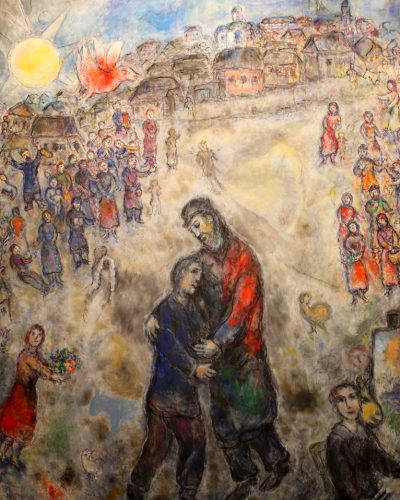
"But when he was still a long way away, his father saw him and felt compassion for him, and he ran and fell on his neck and kissed him" (v. 20). He had, after all, turned his back on his father, but he had not turned his back on his beloved son. He awoke every day thinking, 'I hope he comes home today.' He frequently looked to the horizon to see whether he was coming home. "Is that my son?" he asked every time he saw someone. "Day after day, week after week, month after month, then years passed, but he never gave up hope. Then one day he looked up and spotted a man strolling slowly in the distance. "Is that my son?"" He took another look. "It looks like him—a little skinny—but it could be him. He looked again, his face filled with joy: "Yes, it's him. He ran to him with all his strength, his heart full of love for his poor, tired kid. When you return to God, he rushes to meet you. As he got closer, he noticed the foul odour of the nsects. Similarly, our sin is a smell in God's nostrils, but He still loves and accepts us when we repent and return to Him. The father hugged him tightly and kissed him repeatedly. He was overjoyed to see him. God genuinely loves us. He'll let us back in.
"And the son said to him, "Father, I have sinned against heaven and in your sight.
"I am no longer worthy to be called your son in your eyes" (v. 21).
That was all the father needed to hear. He stopped the son's prepared speech before he could make a deal based on work. He would not accept him back as a servant but fully accepted him as his son. If he became a servant, he would be earning his place, but God makes us His sons freely.
When we are saved, the Father bestows upon us:
"But (instead of being made a servant), the Father commanded to His servants, Hurry, bring out the finest robe and put it on him" (v. 22). When we come to God, we are no longer considered outsiders. He accepts us as his sons and takes us in. He removes our filthy rags and wraps us in His finest clothes. We put his robes on, and he says, "Make my boy look like me. We are given the robe of righteousness, which enables us to stand before God pardoned and justified: "There is now no condemnation for those who are in Christ Jesus" (Rom 8:1). Now we can see God in our eyes. The father did not want to display his son's wrongdoing and disgrace, so he covered it up. He was the only one who witnessed his condition because he had the robe carried out to the son so he could put it on and walk home in it. As a result, everyone saw him as a beloved, accepted son rather than a despised beggar. The robe indicated that he was honoured by his ather. He also clothed us with power from on high in a garment of praise and a spirit of heaviness. We have a fresh start (2 Corinthians 5:17).
2. "And put a ring on his hand (He gives us His authority, the Name of Jesus, saying: 'do business on my behalf') and sandals on his feet (saying: 'I have set you free; go and share the gospel'. Represent me as my witness and ambassador.
3. BATH: Although it is not stated, the son was clearly bathed (cleansed from sin) (Titus 3:4–7).
4. The Party: "And bring the fatted calves here and kill them, and let us eat and be merry; for this my son was dead and is alive again; he was lost and is found. The father hosted a great party and prepared and kept the best calf for a special occasion. Eating together is a symbol of covenant relationships and joyous communion with all who have been forgiven. Jesus is comparing God to this father. Such is His love for us that when we repent (turn back to God), He holds a grand celebration to welcome us home and rejoice over us, for we were dead in our sins but are now alive in Christ. We were lost (far away) but have finally returned home. "That's my beloved son; I'm so glad he's returned to be with Me," he exclaims to the angels. Let us celebrate!"
The Older Son (v25–32): They began to celebrate and have a party.
"Now his older son was in the field (working hard), and as he came and drew near to the house, he heard music and dancing, so he called one of the servants and asked what these things meant ('what's going on?'). And he said to him, 'Your brother has returned, and because He has received him safe and sound, your Father has killed the fatted calf.' But he was angry and would not go in."
"Therefore his Father came out and pleaded with him (to forgive his brother and join the rejoicing). So he answered and said to his Father, "Lo, these many years I have been serving (slaving for) you; I never transgressed your commandment at any time; and yet you never gave me a young goat, that I might make merry with my friends" ('I've worked hard and you never gave me a party'). But as soon as your son (note he disowned him as his brother) arrived, having squandered your livelihood with harlots, you slaughtered the fatted calf for him.
His arrogance, jealousy, and fear of the worst were all on display now. Both sons had been estranged from their father. This was clear in the one whose sin was external, but the other's guilt was inside, but eventually exposed (he was outwardly close to the Father, but in his heart he was far away and opposed to the Father's loving generosity of spirit). He had no idea about His love, but he regarded Him as a slave-driver and was angry and rebellious. He believed he had to earn his father's affection through his work. However, the Father loved him and had already given him everything. So he was attempting to earn what had already been provided to him through his labour. He represents self-righteous sinners (such as the Pharisees). He was pompous, spiteful, resentful, and cruel to his father and brother. He refused to forgive his brother, who had already lost everything.
(Those who sin will pay the price because "the wages of sin is death.) But he was not pleased. He was cruel, seeking vengeance in order to make him suffer even more. " And He (the loving Father) said to him, "Son, you are always with me, and all that I have left of my estate is yours. I freely gave everything to you. You could have had a party at any time. It was right that we should make merry and be glad. Why do you want revenge? Why are you upset that your brother is back home? Why are you angry that he has been restored? Because your brother was dead and is alive again.
In this story, Jesus demonstrates that God is like the big-hearted Father (full of love and forgiveness), whereas the Pharisees' conception of a harsh, unforgiving God (like the older brother) was utterly incorrect.